
Health cost
1 in 6
people worldwide experience loneliness, which is associated with more than 871,000 deaths per year.
Source: WHO, 2025The crisis of connection, trust and engagement now translates into measurable costs across at least three key dimensions:
Organizations invest separately in competency development, wellbeing, community building, advisory services and social projects. What is missing is a solution that connects these areas into one coherent process: from assessment and education, through building relationships, to matching partners and implementing joint action.
QCW addresses this gap by integrating competency development, community and a collaboration marketplace into a single scalable model.
We are developing QCW for three groups that take part in social change from different positions, yet often lack a shared space for development, exchange of resources and partnership building.
01
Gain access to competency development, greater visibility, partners, experts and funding opportunities.
02
Benefit from development programs and gain access to verified social initiatives and experts ready to collaborate.
03
Gain access to curated social projects, prepared for partnership, funding and further development.
The first stage of the platform includes the relational leadership course and a marketplace pilot that will connect these groups around specific needs and projects.
At the core of QCW are two mechanisms that we are developing in a research and development format — from proof of concept through to deployment in a working platform:
AI helps build learning paths matched to a user’s values, experience and context of action. Technology does not replace relationships — it organizes knowledge, strengthens reflection and helps design more relevant development processes.

Algorithms supported by curatorial work connect initiatives, experts, organizations and funders around specific challenges and projects — so that contact turns into joint action rather than yet another contact database.
We are developing and testing both mechanisms on real needs, knowledge and the community built around Entuzjastki.
QCW’s funding rests on five complementary sources:
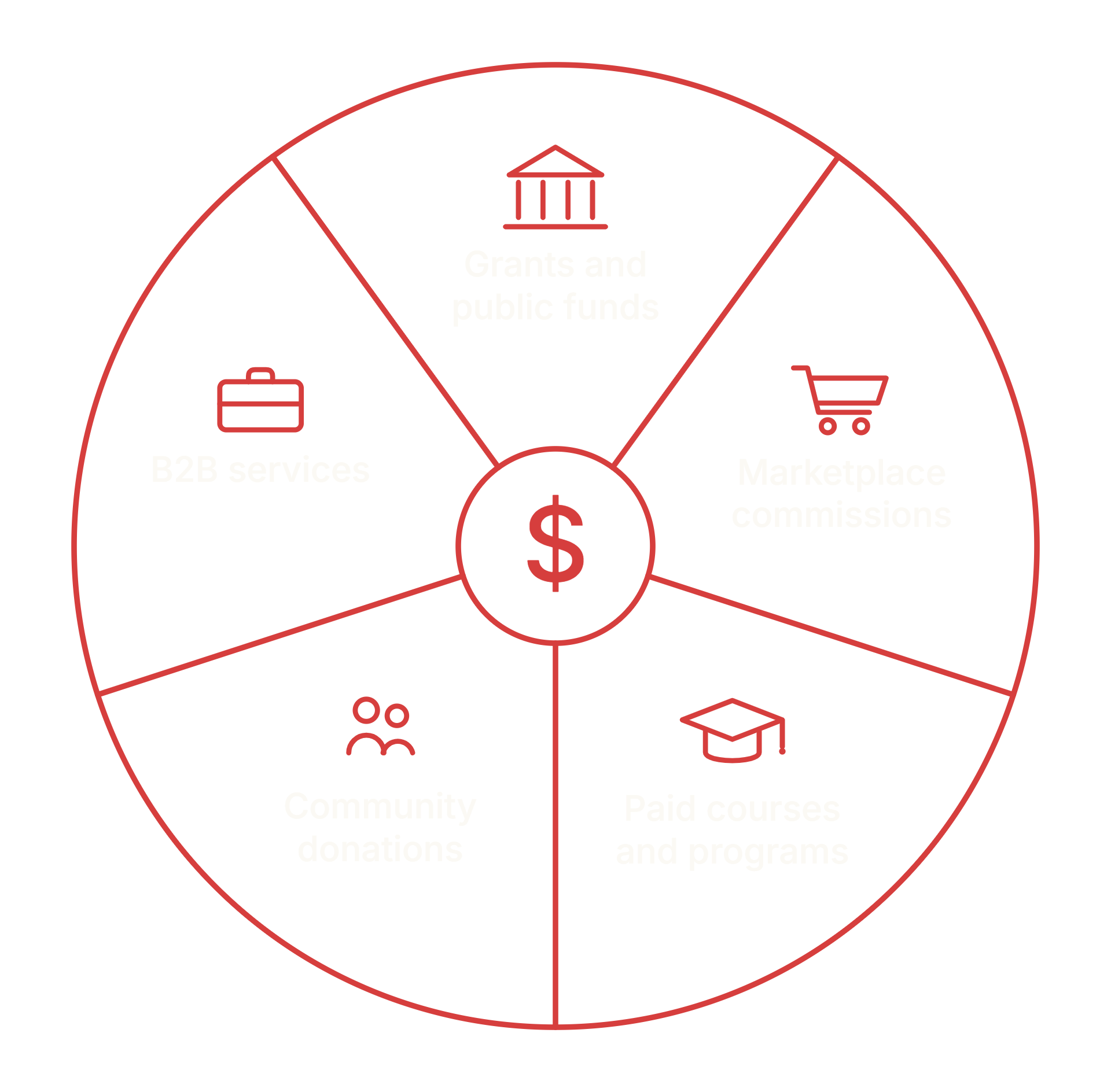
grants and public funds for development, research and pilots,
commissions from the collaboration marketplace,
paid courses and development programs,
B2B services — programs, workshops and processes for companies and institutions,
community donations.
Diversified revenue reduces dependence on any single source and builds a path towards financial self-sufficiency.

100 in-depth conversations with women leading social change, a series distributed by CANAL+ and a recognized brand with an audience of more than 50,000 on Instagram and Facebook.

An international summit co-created with the Germany-based Pocket Project Foundation, dedicated to women leaders working for peace, addressing social polarization and collective trauma.

A monthly meeting format, developed and tested in practice, in which leaders from different sectors analyze social problems together and search for solutions using the method of collective wisdom.

The international strand of the project — showcasing women leaders from around the world, building a consortium with NOVACT, Media Liberation Fund, Ujazdowski Castle Centre for Contemporary Art and Terytorium Kobiet, and preparing the Ukrainian edition of the project — Ukraïnky, devoted to social resilience and the role of Ukrainian women leaders in rebuilding democracy.

Co-founder · vision, methodology and development strategy
PhD in philosophy, author and producer of social and educational projects. Creator of Entuzjastki and the formats on which QCW is built. She has experience developing international projects and partnerships around leadership, social resilience and collective wisdom. She is responsible for the platform’s strategic and content direction, the competency model, partnerships and community development.
Co-founder · technology and AI development
PhD in engineering and technical sciences and an AI/ML specialist with experience in research and development projects, research commercialization, work with the SME sector and building decision-support systems. Her experience includes work at Lodz University of Technology and projects carried out in collaboration with Oxford, Cambridge and IBM. At QCW she is responsible for the platform’s technology architecture, the development of its AI mechanisms and their deployment and scaling.